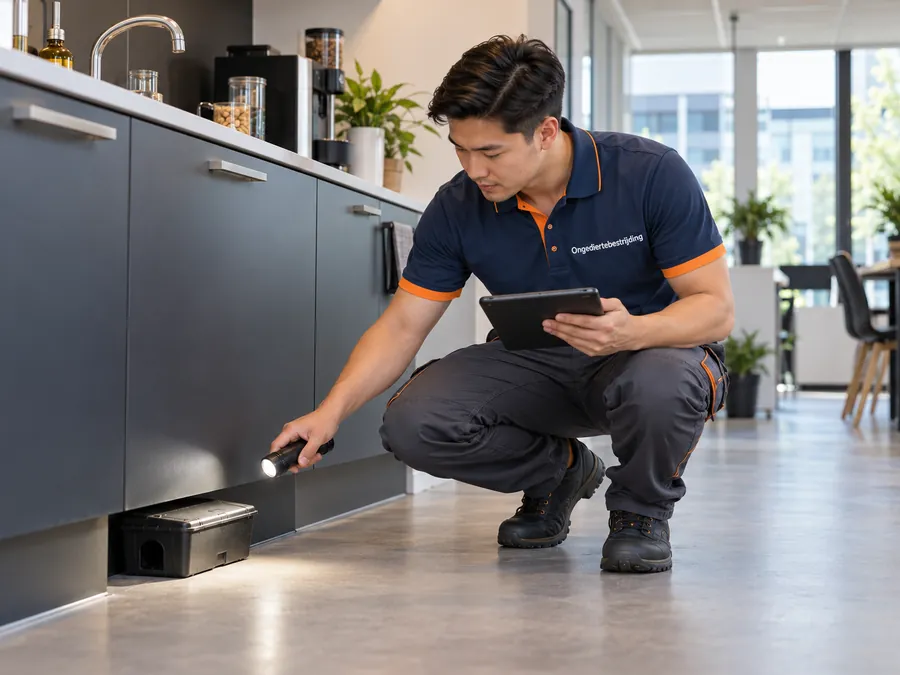
Rat control in Hoofddorp: start with the source
A rat in the garden has come from somewhere, and that is the key. During the inspection we check the garden, shed and crawl space for burrows, runs and gnaw marks. Indoors we look at drains, rodding eyes and the connection to the sewer, because a broken or poorly capped pipe is a common way in. If we suspect a fracture under the floor, we recommend a camera survey by a drainage specialist and, where suitable, a rat valve (rattenklep), which stops rats coming up the pipe from the sewer.
Then comes targeted control: traps or locked stations with professional rodenticides, which only a certified pest controller may place. Rats are wary of unfamiliar objects and may avoid a new station for days, so we position stations right on their regular routes and check them often.
Recognising rats around your home
Brown rats are shy and mostly active at dusk and during the night. These signs give them away:
- burrows with smooth edges in borders, under paving, beside the shed or in a ditch bank
- flattened paths through the grass and dark, greasy smears along walls and fences
- droppings clearly larger than a mouse's, often in small groups
- gnaw marks on the wheelie bin, wooden doors or drainpipes
- heavier thumping in the crawl space or ceiling than a mouse would make
Brown rats are strong swimmers and like living near water, so gardens backing onto a ditch get more visits.
Why waiting is a bad idea
Rats breed fast, and a few animals under the decking can become a colony within a single season. They gnaw on cables, pipes and insulation and can undermine paving. Rats can also spread disease, such as Weil's disease, which is passed on through their urine. Keep children and pets away from places where rats run, and wear gloves when clearing up anything they have been near.
The sooner the route is known, the smaller the job. A few burrows in the garden are dealt with far more easily than a colony that has set up home in the crawl space.
What you can do yourself
Rats stay where the food is. A few changes make your garden far less appealing:
- Feed birds sparingly, using a bird table or feeder so nothing ends up on the ground.
- Keep food scraps off the compost heap and the wheelie bin lid firmly shut.
- Bring chicken and rabbit feed indoors at night or store it in a sealed bin.
- Clear clutter and log piles away from the walls of the house, so rats have less cover.
Do not put down poison yourself: it is dangerous for pets and for owls and birds of prey that eat a poisoned rat. If you see rats in a park, verge or other public space, report it to the gemeente Haarlemmermeer.
Rats coming in from the sewer
Do you hear gnawing under the floor or find droppings in the meter cupboard or behind the washing machine while the garden seems quiet? Then the rat is probably using the sewer. After renovation work an old drain is sometimes left without a proper cap, or a pipe in the crawl space has cracked. Very occasionally a rat even climbs up through the toilet.
In that situation, control only works once the pipe has been repaired. A drainage specialist can pinpoint the break with a camera, and we advise on where a rat valve should go. Small droppings in kitchen cupboards point more towards mice; see mouse control. For other pests, our pest control in Hoofddorp service can help.